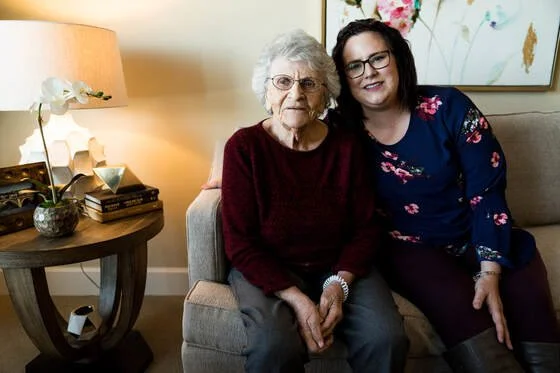
Support Groups Can Help the Grieving

When someone close to you dies, your world changes. Feelings can range from grief and sorrow to shock and fear. The surviving person may feel guilty for being alive, or angry at a loved one for leaving them. All these feelings are normal. There are no rules about how you should feel; and no right or wrong way to mourn.

Grief can cause a person to easily cry, have trouble sleeping, problems concentrating and making decisions as well as having little interest in food. When intense feelings linger over a long period of time, experts say a targeted or specialized support group may be beneficial by letting the person know they are not alone and that others are experiencing many of the same things as they are. 

Mary Lamia, a clinical psychologist and author of the 2022 book Grief Isn’t Something to Get Over: Finding a Home for Memories and Emotions After Losing a Loved One, says, “It’s important to look for grief support that will not necessarily make you feel better, but makes you feel understood. She adds It’s not about getting over it, but learning how to continue to live with it. Also, as grief is a personal experience, it is important to find a group where you feel understood and are not judged.    

It may take time to find the right fit. Grief support groups can focus on specific illnesses such as cancer or Alzheimer’s, or the loss of a special loved one such as a spouse, child or sibling. AARP suggests that when looking for a support group to start local by asking area hospice organizations and hospitals as well as senior centers or funeral homes for referrals. You can also do a national search for groups that can provide local outreach or join a support group online. 

Experts say it is important to keep in mind grief support groups are not intended to take away the pain, but rather to remember hurting is part of the healing process.  Grief counselors also say you may have to try more than one group to find one that connects with your needs. 

At MorningStar at West San Jose, we provide a full range of senior living options including independent living, assisted living and memory care. Our beautiful community promotes carefree retirement years with built-in companionship, predictable budgeting, all-day dining and programs designed to enhance quality of life. For independent living and assisted living, stylish suites are available in a variety of floor plans and configurations. In addition, our distinct Reflections Neighborhood offers memory care suites within a supportive and loving environment. Please contact us or visit our website to learn more. 

MorningStar senior housing is guided by a culture rooted in our mission of honoring God, valuing seniors, and investing in our team, which allows us to deliver services with warmth, sincerity and depth of purpose. We have built a reputation for creating homes filled with an atmosphere of love and community. Please contact us for more information about the finest independent living, assisted living and memory care in San Jose.

Source: aarp.org/caregiving/basics/grief-resources/

Supportive Community Living for People With Dementia

The US News & World Reports, states, “More than 6 million people in the U.S. have Alzheimer’s disease according to the Alzheimer’s Association. More than 11 million family members care for someone with dementia, while others with memory issues live in assisted living communities, nursing homes or memory care units.”

The decline of a person with Alzheimer’s disease slowly worsens over time; and it is not always easy for family members to recognize their loved one needs additional support for both their safety and daily living activities. Healthcare providers say a community setting may be called for if the person exhibits subtle behavioral changes in personality, declining health and an increase in confusion. Incontinence is another reason families turn to memory care. Moreover, the family caregiver should be considered as increasing needs can lead to caregiver burnout. Also, memory care provides peace of mind if your loved one is no longer answering their phone or replying to emails. 

For some, Alzheimer’s can bring with it dramatic and challenging behavior changes. Your gentle spirited mom or dad may start to exhibit aggressive behaviors that are difficult to deal with. A generally outgoing person may withdraw and avoid socializing. Hygiene can be hit and miss, and often the person no longer changes clothes or brushes their hair or teeth. 

Other behaviors that change over time can make family caregiving increasingly difficult and time-consuming. Physical safety concerns such as wandering, forgetting to turn off the stove, burning themselves or still driving can be a constant worry.    

Senior living communities offering specialized care like MorningStar at West San Jose are equipped to handle these challenges. To begin with, the physical makeup of our distinct Reflections Neighborhood is designed to protect residents from harm and includes secure doors, terrace and easy-to-navigate surroundings. 

All MorningStar’s compassionate, senior housing dedicated team receive training to provide the best care.  In addition, memory care residents are encouraged to participate in a variety of purposeful activities that include music, life skills, art, entertainment and exercise as well as special events and outings. We invite you to schedule a tour to experience firsthand our philosophy and commitment to caring for those with Alzheimer’s and other dementia-related diseases.  

MorningStar is guided by a culture rooted in our mission of honoring God, valuing seniors, and investing in our team, which allows us to deliver services with warmth, sincerity and depth of purpose. We have built a reputation for creating homes filled with an atmosphere of love and community. Please contact us for more information about the finest independent living, assisted living and memory care in San Jose.

BPPV: A Frequent Cause of Dizziness in Older Adults

Benign paroxysmal positional vertigo (BPPV) is a disorder arising from a problem in the inner ear resulting in repeated, brief periods of vertigo. It is typically triggered by changes in the position of the head or with movement. The Mayo Clinic explains BPPV causes brief episodes of mild to intense dizziness and can make you feel as if your surroundings are spinning, a loss of balance or unsteadiness, nausea and vomiting. Episodes typically last a minute or less.  

The condition is more common in people over the age of 50 but can occur at any age. While BPPV is more common in women, head injuries and other disorders of the balance organs in the ear can make a person susceptible.

The inside of your ear contains a tiny organ called the vestibular labyrinth, which has three loop-shaped structures of semi-circular canals. These canals contain fluid and fine, hairlike sensors that monitor your head’s rotation. Also in the inner ear, the otolith organs monitor the head’s movement and position as related to gravity; and contain otoconia, or ear stones, that are small crystals of calcium carbonate. When these crystals become dislodged, they disrupt a person’s sense of balance causing BPPV.

A visit to your primary care physician can help rule out other medical causes for your dizziness. Before your appointment, the Mayo Clinic recommends writing down your symptoms, when they began and how often they occur. Be sure to mention if you have had a recent blow to the head. Make a list of your key medical information and medications, vitamins and supplements you take. If the doctor determines your problem is displaced crystals, there are exercises they can teach you to help mitigate symptoms.  

MorningStar at West San Jose provides a vibrant lifestyle with maintenance-free living, spacious private suites; five-star dining, an array of resort-style amenities and more. Our contemporary-style building offers independent and assisted living suites in a choice of floor plans featuring high ceilings, large windows, and most are equipped with a washer & dryer.  In addition, our distinct Reflections Neighborhood offers 34 memory care suites designed to support and elevate the lives of our most tender residents. Please visit our website to learn more about our beautiful community and to schedule an appointment for a personalized tour.

MorningStar has considered it a privilege and responsibility to “cast a new light” on senior living, inspired and empowered by our unique mission: to honor, to value, to invest. Our passionate commitment to serving seniors has earned us a reputation for satisfaction that is second to none. Contact us for more information about the finest senior housing, assisted living and memory care in San Jose.

Learn More About Cataracts

Cataracts are cloudy areas that form in the lens of the eye, which is normally transparent, and more than 20 million Americans are currently affected by them. They are most common in adults over 40 years old and usually develop over several years.   Surgery is generally recommended once vision is impaired to a degree that people have trouble reading, driving and recognizing faces. Today the surgery is a quick, safe procedure, replacing the cloudy lens with a clear plastic one. 

Doctors say there are things people can do to reduce their risk of developing cataracts with quitting smoking at the top of that list. The U.S. Food and Drug Administration reports people who smoke are two to three times more likely to develop cataracts. A healthy diet of fresh fruits, vegetables, whole grains, good quality fats (avocados, olive oil, and omega oils) and lean animal-sourced or plant-sourced proteins additionally reduces the risk of cataracts. 

Maintaining a healthy weight is important as obesity increases your risk of developing type 2 diabetes, which is a risk factor for cataracts. Other ways to reduce your risk include wearing UV blocking sunglasses when in the sunlight and getting at least 7 hours of sleep each night. The risk for cataracts also increases with age, family history, and a history of eye inflammation or injury. 

If you are not ready for surgery yet, doctors say stronger glasses and brighter lights may help. Keep up with regular eye exams and renew your eyeglass prescription as needed. Wear sunglasses in the sun and avoid night driving. As your cataracts continue to develop and eyesight worsens, at some point you will most likely need surgery.  

MorningStar at West San Jose is a 55+ community offering independent and assisted living suites with a choice of studio, one-bedroom and two-bedroom floor plans. Residents enjoy carefree retirement years as we handle the maintenance and provide luxury amenities, five-star dining as well as senior care and hospitality services. In addition, our Reflections Neighborhood offers specialized memory care for seniors with Alzheimer’s and other dementia-related diseases. Please visit our website for more information.

This post is intended for informational purposes only.  Please contact your health care provider with any questions or concerns you have regarding your eyesight.

MorningStar’s foundation is based on the mission to honor God, value seniors and invest in our staff to create a unique senior living experience.  Set in a warm, loving atmosphere with beautiful surroundings and resort-style amenities, we provide outstanding independent living, assisted living and memory care in San Jose.  Contact our team to inquire about availability, pricing or to set up a tour on senior housing.

Sources:

medicalnewstoday.com/articles/157510

fda.gov/tobacco-products/health-effects-tobacco-use/how-smoking-can-contribute-vision-loss-and-blindness#3